
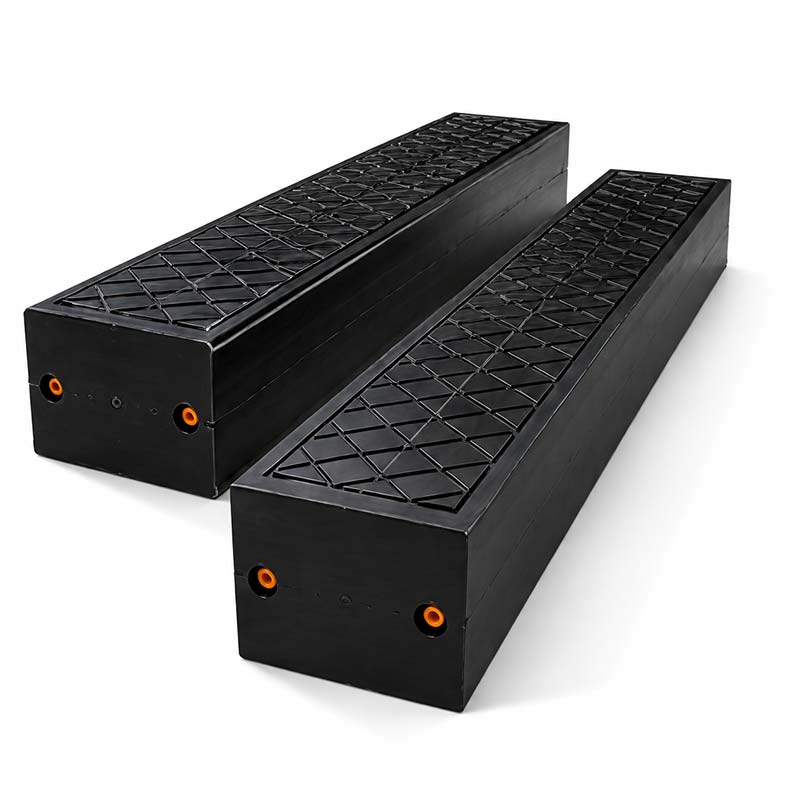
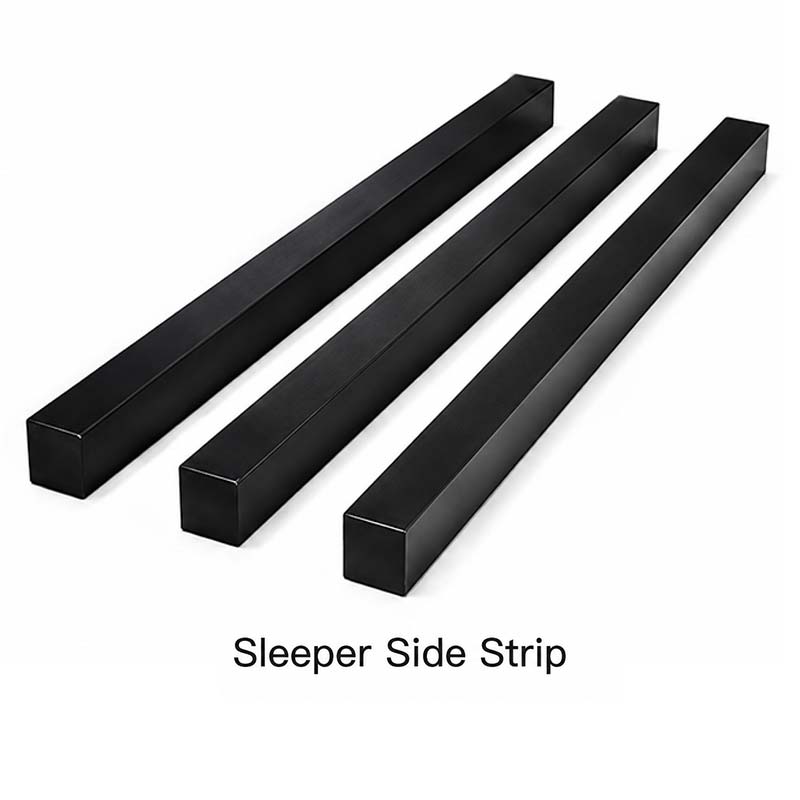
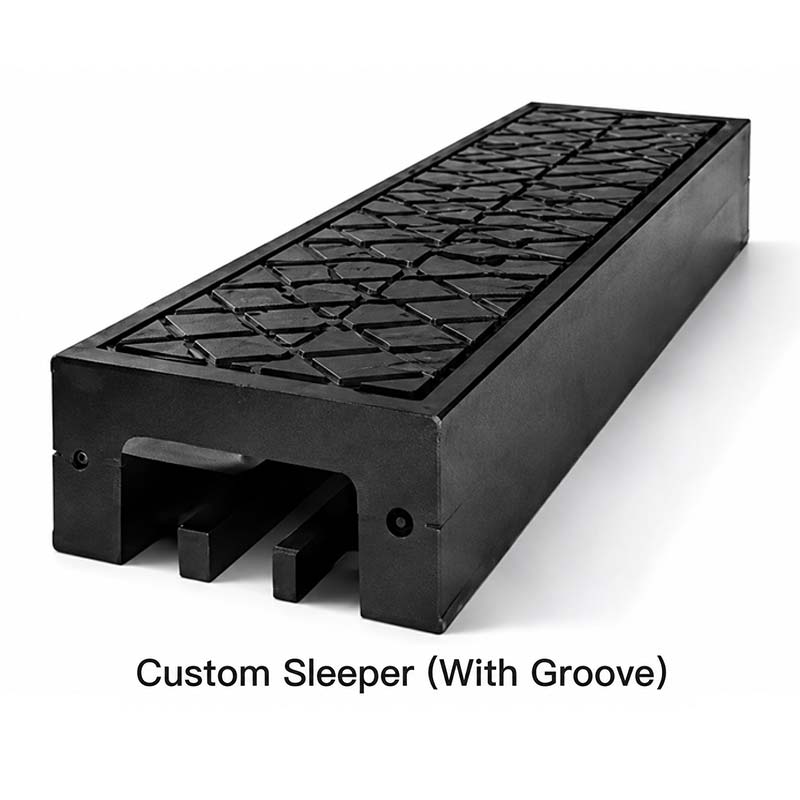
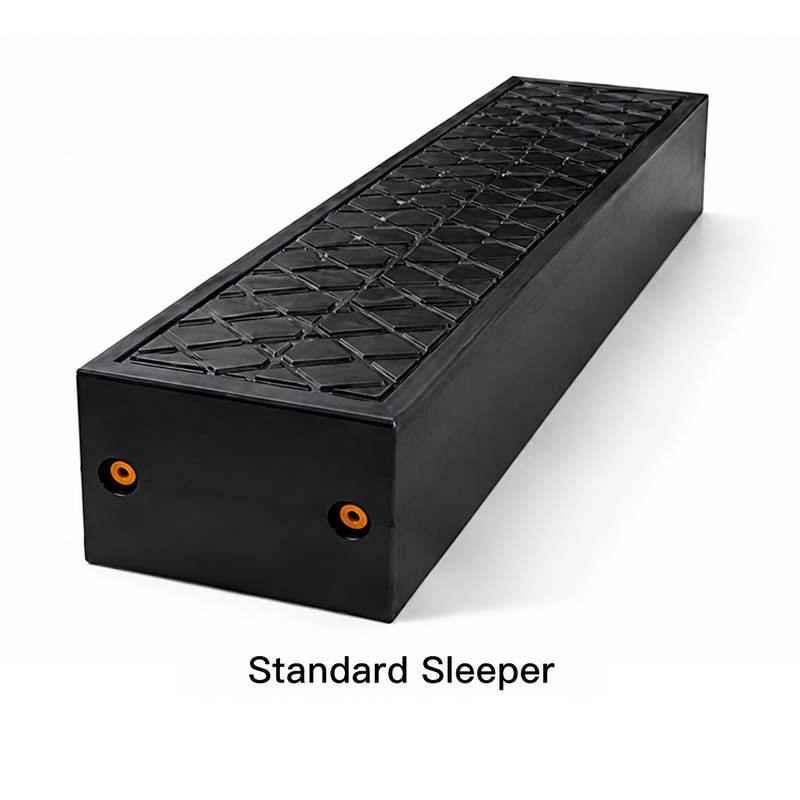
Description
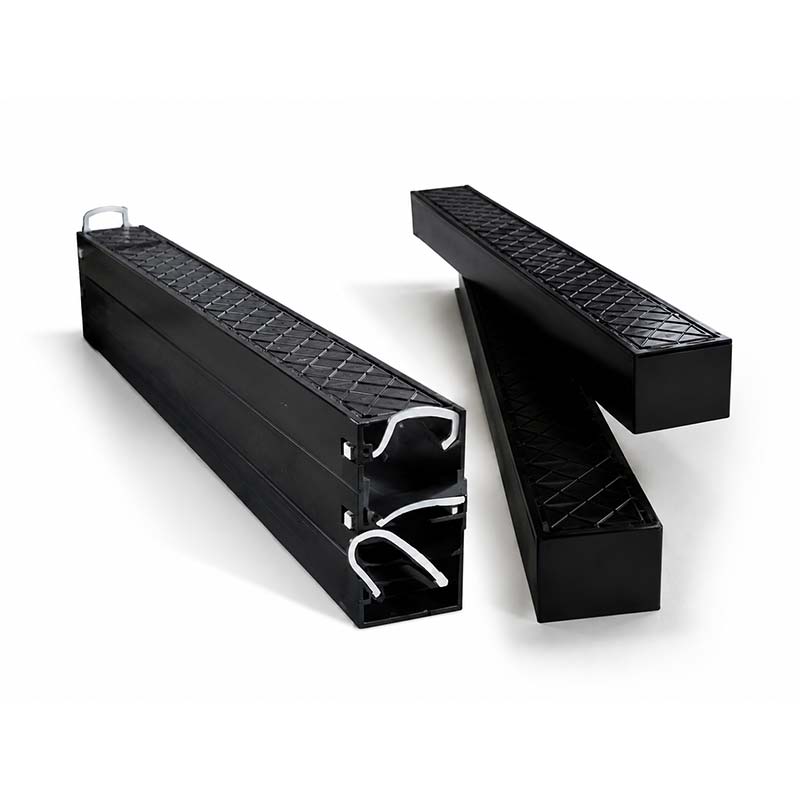
Composite Sleeper Specification
| Item | Specification | Notes |
|---|---|---|
| Regular Cross-section | 100×100mm, 150×150mm, 200×200mm, 300×300mm | Can be trapezoidal or U-channel integrated molding (compatible with QU70/P24 rails, etc.) |
| Standard Length | 1000/2000/2500/3000/6000mm | Maximum customized length: 12 meters |
| Color | Customizable | – |
| Dimensional Tolerance | Length, Width, Height: ±1mm | Bolt hole positions precisely match rail fasteners |
| Structural Form | Solid molded integrated formation; U-channel integrated type | Solid type: No delamination, no bubbles; U-channel type: Comes with rail limit slots and pre-embedded metal sleeves |
Raw Material Parameters (Material Specifications)
- Molecular Weight: ≥3 million g/mol; 3–5 million g/mol preferred for heavy-duty applications; 5–7 million g/mol for specialized wear-resistant scenarios.
- Modification Formula: Additives such as UV stabilizers, antistatic agents, flame retardants, and wear-resistant fillers can be incorporated as needed; insulation modification is required for electrified tracks, while UV-resistant masterbatch is added for outdoor applications.
- Density: 0.93–0.96 g/cm³; weight is only 1/8 that of steel and 1/3 that of concrete sleepers, facilitating manual handling and installation.
Mechanical Load-Bearing Parameters (Critical for Track Load Support)
- Tensile Strength: ≥30 MPa (premium molded versions can exceed 32 MPa); resistant to tearing and cracking.
- Compressive Strength (10% strain): ≥25–55 MPa (≥50 MPa required for heavy-duty gantry crane sleepers); minimal deformation under long-term rolling loads (deformation <0.5 mm after 100,000 load cycles).
- Charpy Notched Impact Strength: ≥80–150 kJ/m²; unnotched impact strength >150 kJ/m²; resistant to brittle fracture from wheel impacts or heavy object strikes.
- Flexural Strength: ≥30–45 MPa; resists bending deformation caused by concentrated track loads.
- Elongation at Break: ≥100%; high toughness with no risk of brittle fracture.
- Static Load Capacity: A single standard solid sleeper supports a static load of 2–8 tons; customized thickened versions accommodate 300-ton class heavy-duty equipment.
Service Life and Environmental Compatibility Parameters
- Design Service Life: Over 50 years for indoor industrial/mining use; over 30 years for outdoor UV-resistant modified versions—far superior to wooden sleepers (3–5 years).
- Corrosion Resistance: Fully resistant to acids, alkalis, salts, coal slurry, and chemical waste liquids; immune to mold and insect infestation.
- Noise and vibration reduction: Absorbs impact vibrations from the track; operating noise is reduced by over 30% compared to steel sleepers.
- Environmental friendliness: Recyclable via re-granulation; free from preservative chemical contamination; a more eco-friendly alternative to treated timber sleepers.
Physical and Weather-Resistance Parameters of Railway Sleepers
| Test Item | Standard Indicator | Description |
| Water Absorption | <0.01% | Almost non-absorbent; no expansion or deformation in humid mines and ports. |
| Operating Temperature Range | -50℃ to +80℃ | No brittle fracture at low temperatures; suitable for cold storage and northern outdoor tracks; extreme low temperature resistance up to -269℃. |
| Melting Point | 136–138℃ | Avoid prolonged exposure above 80℃ in high-temperature workshops. |
| Shore D Hardness | 63–68 | Balances toughness and surface wear resistance; resistant to indentation and cracking. |
| Coefficient of Friction (vs Steel) | 0.07–0.18 | Self-lubricating; low sliding resistance on steel rails; noise reduction and vibration damping. |
| Wear Resistance (Mortar Abrasion) | Wear loss ≤0.02g/1000 revs | Wear resistance is 7 times that of carbon steel and 4–5 times that of nylon. |
| Insulation Resistance | >10^10 Ω·cm | Insulation against leakage for electrolytic aluminum and subway tracks. |
Selection Criteria
- Light-duty tracks for standard factory facilities: Molecular weight 3 million; impact strength ≥80 kJ/m²; compressive strength ≥25 MPa.
- Heavy-duty tracks for mines/ports: Molecular weight 4–5 million; impact strength ≥120 kJ/m²; compressive strength ≥45 MPa.
- Insulated tracks for electrolytic aluminum plants/subways: Enhanced with insulation-grade modification; volume resistivity >10¹⁰ Ω·cm.
- Outdoor applications: Formulated with UV-resistant carbon black (black material) to delay aging and cracking.