Description
Coal Bunker Liners Specification
| Item | Specification |
|---|---|
| Standard Dimensions | 1000 × 2000 mm, 1220 × 2440 mm, 1500 × 3000 mm. Custom dimensions are available to meet specific project requirements. |
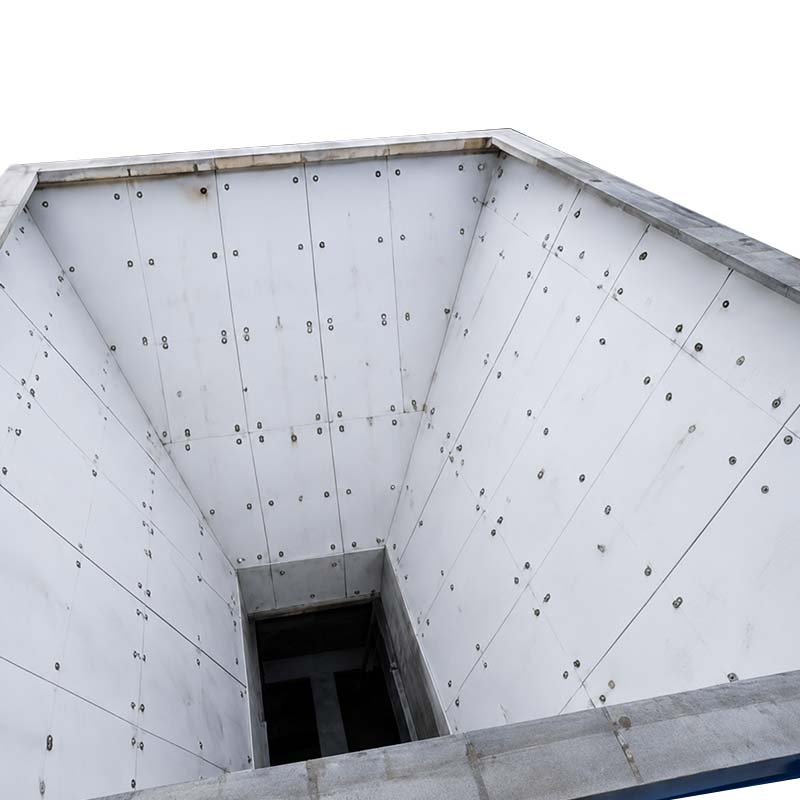
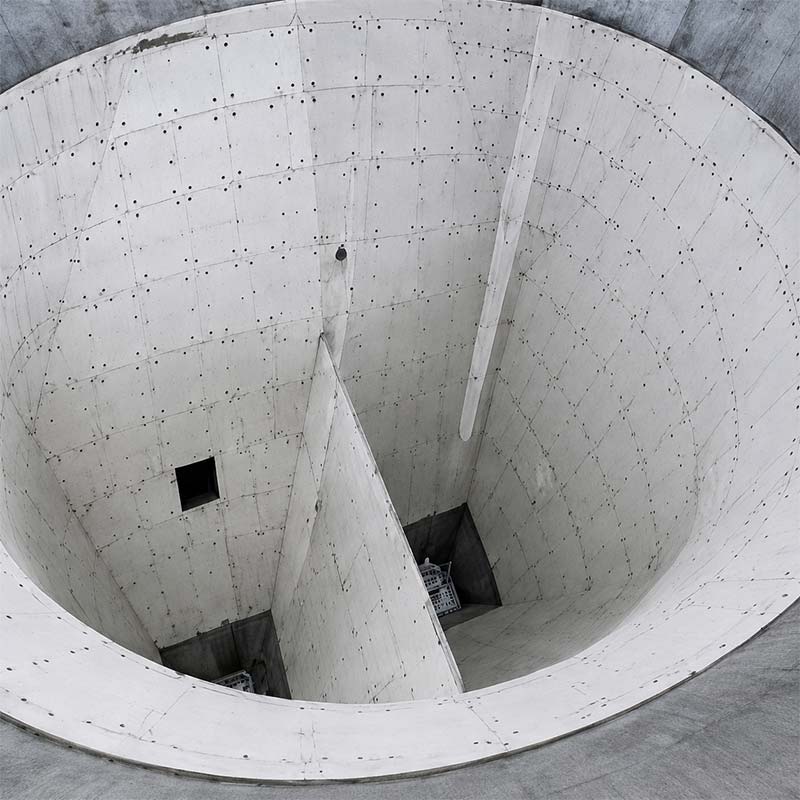
| Custom Fabrication | Supports custom cutting, irregular shapes, curved bending, and fabrication for round, square, conical, and other silo configurations. |
| Thickness | 8 mm, 10 mm, 12 mm, 15 mm, 20 mm, 25 mm, 30 mm. For light-duty powder storage, 8–15 mm is recommended. For heavy-duty bulk material handling and high-abrasion applications, 20–30 mm thick liners are recommended. |
| Color | Custom colors available upon request. |
| Dimensional Tolerance | Length and width: ±2 mm; Thickness: ±1 mm. The liner surface is smooth, flat, and free from bubbles, delamination, and cracks, ensuring excellent flatness and close contact with the silo surface after installation. |
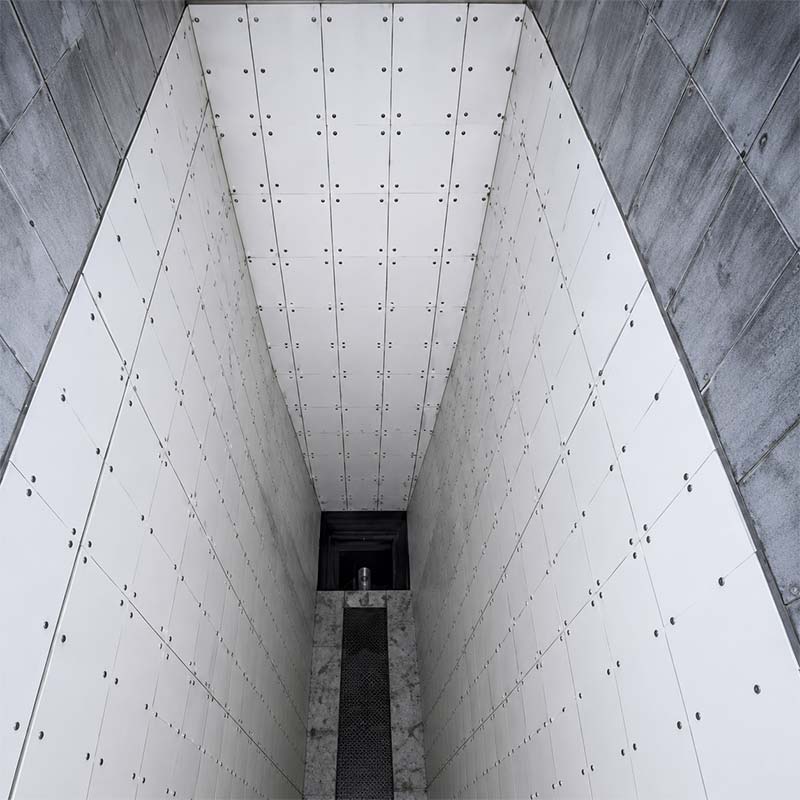
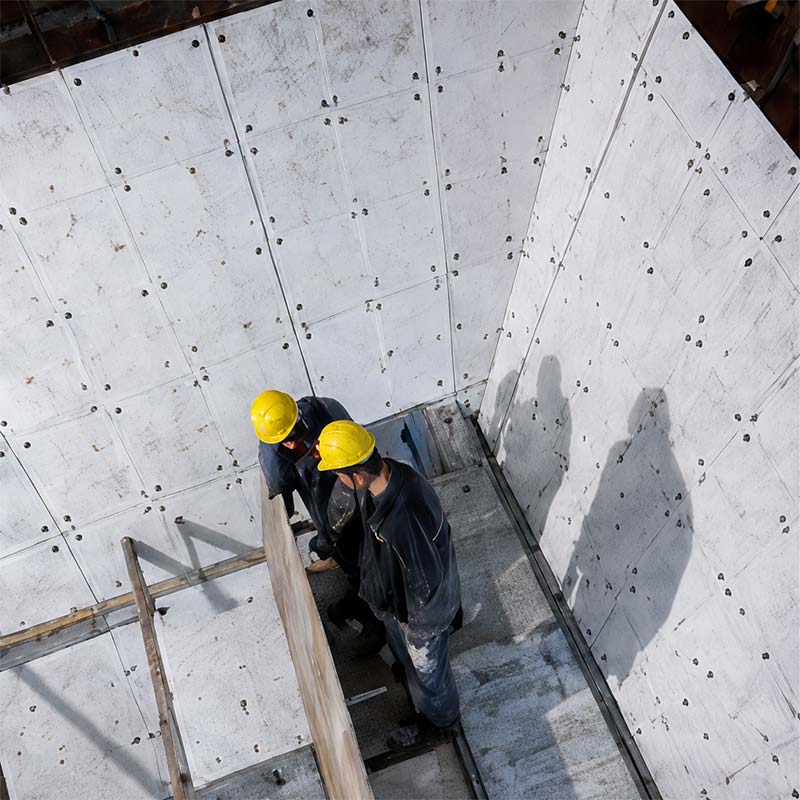
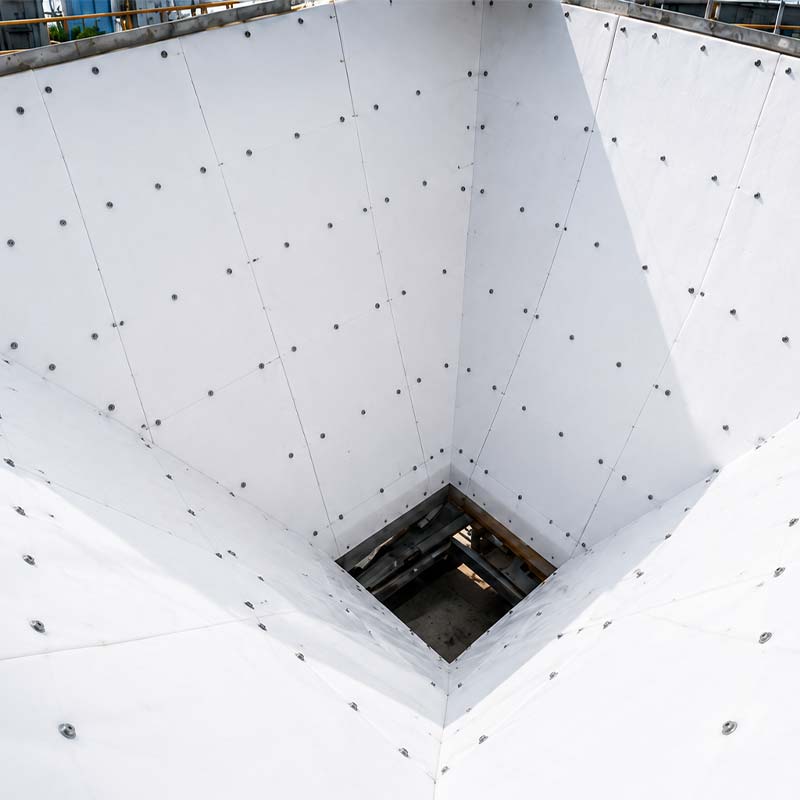
| Installation Options | Custom countersunk bolt holes, welding holes, and overlapping joint edges are available. Supports staggered joints and seamless installation to ensure secure fastening without loosening or detachment. Suitable for inclined walls, vertical walls, conical bottoms, and other silo structures. |
Basic Material Specifications
- The molecular weight is available in different grades according to working conditions. The standard industrial grade is not less than 3 million g/mol. Heavy-duty wear-resistant grades for coal mines and coke plants are not less than 4 million g/mol, while grades for cement plants and high-abrasion ore handling applications are recommended at 5 million g/mol or above. The ultra-high molecular weight provides outstanding wear resistance, impact resistance, and anti-adhesion performance.
- The material density ranges from 0.93 to 0.96 g/cm³. Compared with steel liners, the material is lightweight, significantly reducing the structural load on silos and bunkers while lowering installation and maintenance costs.
- Modified material formulations are available for different applications, including standard anti-stick, heavy-duty impact-resistant, anti-static, flame-retardant, and acid/alkali-resistant grades. These products are suitable for coal mines, power plants, coke plants, cement plants, grain storage facilities, chemical plants, and other bulk material handling industries.
Key Mechanical Properties
- The tensile strength is not less than 30 MPa, providing excellent structural integrity and preventing cracking, tearing, or detachment during long-term operation.
- The compressive strength at 10% strain is 35–55 MPa, enabling the liner to withstand concentrated impacts and heavy static loads from coal, ore, and other bulk materials without permanent deformation.
- The notched impact strength is not less than 120 kJ/m², offering exceptional resistance to impact from falling materials while maintaining toughness in low-temperature environments.
- The elongation at break is not less than 150%, allowing the material to absorb impact energy effectively without brittle fracture during continuous material discharge.
- The abrasion loss is no more than 0.02 g per 1,000 revolutions. The wear resistance is approximately 7–10 times higher than carbon steel and 4–6 times higher than conventional nylon liners, significantly extending service life.
Physical, Weather Resistance, Anti-Stick and Corrosion Resistance
- The operating temperature ranges from -50°C to +80°C, ensuring stable performance in both extremely cold outdoor conditions and high-temperature industrial environments without softening or becoming brittle.
- The water absorption rate is less than 0.01%, providing virtually zero moisture absorption and preventing swelling, deformation, or scaling in wet operating conditions.
- The material features excellent self-lubricating properties with a coefficient of friction between 0.07 and 0.15. Its smooth surface effectively prevents material adhesion, arching, bridging, and blockage, ensuring smooth and continuous material flow.
- The liner offers outstanding resistance to acids, alkalis, coal slurry, mine water, and various corrosive media. It will not rust, oxidize, or deteriorate under harsh industrial environments.
- Its dense, non-porous surface minimizes dust accumulation and material build-up, reducing maintenance frequency and improving operational efficiency.
- Anti-static grades provide a volume resistivity exceeding 10⁹ Ω·cm, effectively dissipating static electricity and meeting explosion protection requirements for coal mining and coking industries.
Application Selection Guide
- For grain silos, feed silos, and light powder storage, a liner with a molecular weight of 3 million g/mol and a thickness of 8–10 mm is recommended.
- For power plants, conventional coal mines, and coke plants, a liner with a molecular weight of 3–4 million g/mol and a thickness of 12–15 mm provides excellent wear resistance and anti-stick performance.
- For cement plants, ore silos, and high-abrasion bulk material handling applications, a molecular weight of 4–5 million g/mol with a thickness of 20–30 mm is recommended to ensure maximum durability.
- For hazardous environments such as coal mines, coking plants, and facilities handling combustible dust, anti-static, flame-retardant, and explosion-proof liners should be selected to eliminate electrostatic hazards.
- For wet coal slurry, acidic, or alkaline materials, corrosion-resistant modified liners are recommended to prevent corrosion, deformation, and premature failure.
Service Life and Product Advantages
- Under normal industrial operating conditions, the expected service life is 15–20 years. In heavy-duty, high-impact applications, the service life typically exceeds 10 years, far outperforming steel plates, cast iron, and conventional plastic liners while significantly reducing replacement and maintenance costs.
- The liner effectively eliminates material sticking, arching, bridging, and blockage, ensuring smooth and continuous material discharge without frequent cleaning or the need for air cannons.
- It reduces material residue and waste, improves material utilization, lowers labor and maintenance costs, and increases overall production efficiency.
- The material is non-toxic, odorless, recyclable, and environmentally friendly. Anti-static and explosion-proof grades comply with industrial safety requirements for hazardous operating environments, ensuring reliable and safe long-term operation.