Description
UHMWPE Sheet Size Specifications
| Thickness (mm) |
Width (mm) |
Length (mm) |
Color |
Remarks |
| 10–300 |
1260 |
3080 |
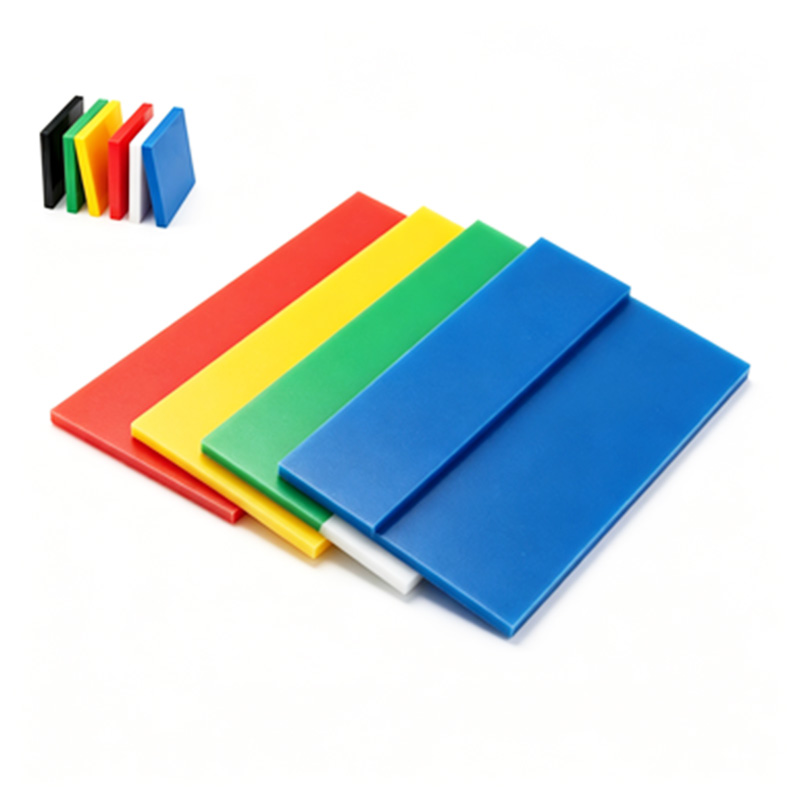
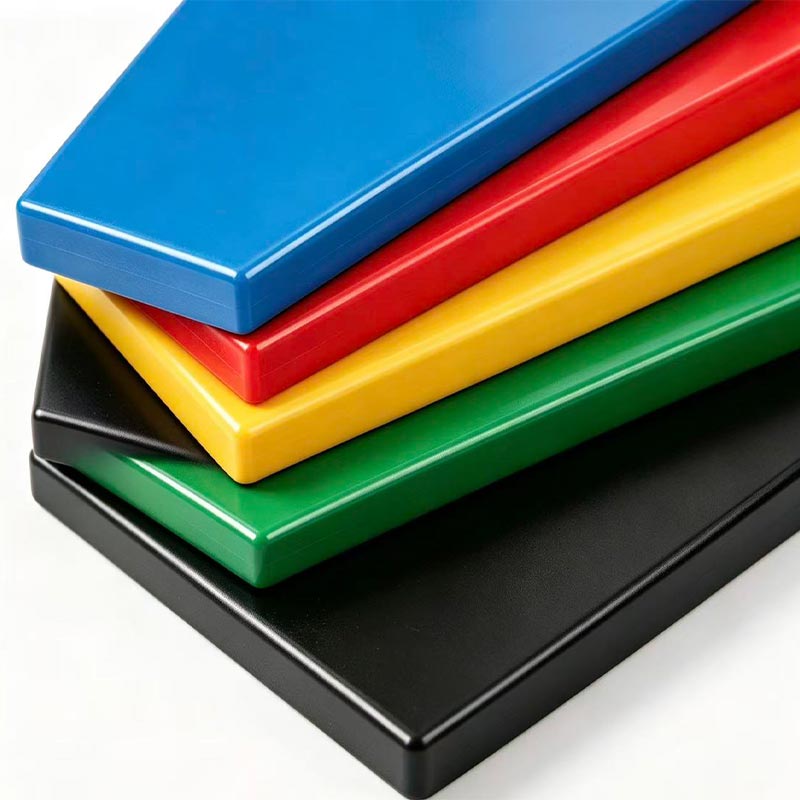
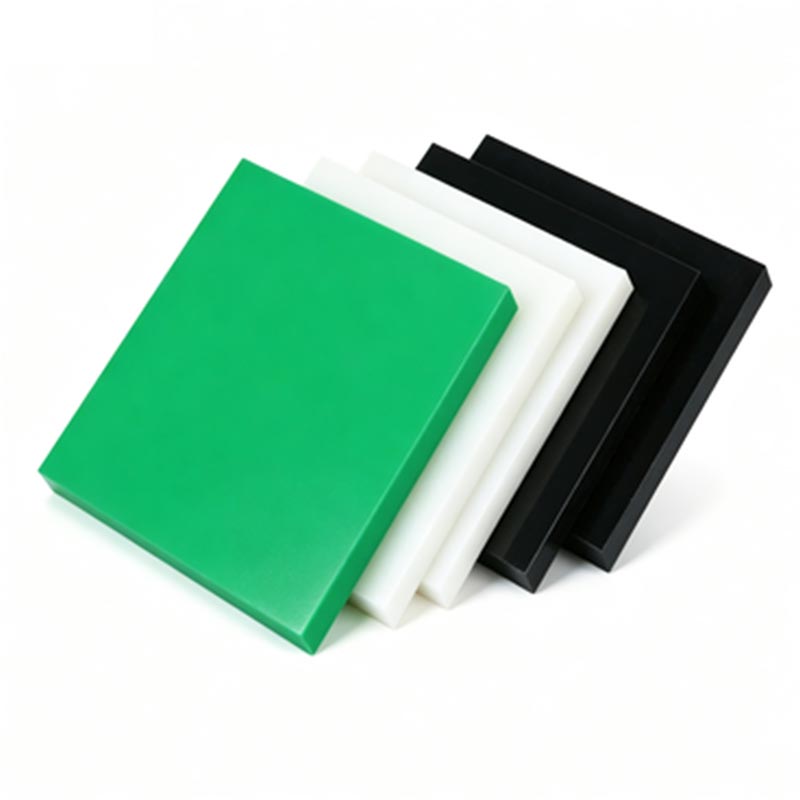
Customizable |
Mirror surface, flat, no deformation |
| 10–300 |
1050 |
4150 |
Customizable |
Mirror surface, flat, no deformation |
| 10–300 |
1510 |
4150 |
Customizable |
Mirror surface, flat, no deformation |
| 10–300 |
1550 |
5150 |
Customizable |
Mirror surface, flat, no deformation |
| 10–300 |
1040 |
6025 |
Customizable |
Mirror surface, flat, no deformation |
| 10–300 |
— |
6100 |
Customizable |
Mirror surface, flat, no deformation |
Basic Material Parameters
- Substrate molecular weight: Standard industrial grade ≥ 3,000,000 g/mol; 4,000,000–5,000,000 g/mol for medium and heavy-load wear-resistant working conditions; 5,000,000–7,000,000 g/mol for high-end precision wear-resistant scenarios. The molecular weight is even and stable, free of low-molecular impurities and mixed recycled miscellaneous materials.
- Material density: 0.93–0.96 g/cm³. The material features light weight, with its dead weight equivalent to 1/8 of steel and 2/3 of nylon. It is easy to cut, lathe, polish and install, without adding extra structural load to equipment.
- Molding process: Plates are integrally compression molded; rods are densely formed by extrusion or compression molding. The finished products have no air bubbles, pores or delamination, with uniform internal microstructure and isotropic mechanical properties.
- Modified formula categories: General virgin material type, UV-resistant weatherproof type, anti-static explosion-proof type, food-grade sanitary type, flame retardant type, low-temperature toughened type. Compatible with diverse application scenarios including mining, food processing, medical treatment, outdoor environment, explosion-proof sites, etc.
- Product range: Includes UPE wear-resistant sheets, thick & thin plates, round rods, square rods and special-shaped rods. Custom non-standard spare parts such as wear-resistant sliding blocks, shaft sleeves, cushion blocks, lining plates and limit stoppers are available for deep processing.
Core Mechanical Performance Parameters
- Tensile strength: ≥30 MPa. The material boasts outstanding toughness. Sheets and rods remain crack-free, break-free and edge-chip-free during cutting, bending, turning and under repeated cyclic stress.
- Compressive strength (at 10% strain): 35–55 MPa. It features reliable compression resistance. No denting, edge collapse or permanent deformation occurs under long-term static pressure, extrusion and repeated rolling, suitable for equipment load bearing and anti-abrasion protection.
- Charpy notched impact strength: ≥120 kJ/m². It delivers excellent impact resistance, ranking among plastics with top-tier anti-impact performance. No embrittlement or fragmentation occurs at extreme low temperature of -50℃, capable of withstanding material impact, equipment collision and high-frequency vibration.
- Elongation at break: ≥150%. Ultra-high toughness eliminates brittle fracture risks. It accommodates micro deformation of equipment and transient impact loads, ensuring highly stable operation.
- Abrasion resistance: Mortar abrasion loss ≤0.02 g/1000 revolutions. Its wear resistance is 7–10 times that of carbon steel, 6 times that of ordinary PE sheets, and 4–5 times that of nylon. Sheets and rods avoid grooving, powder shedding and rapid wear under long-term friction.
- Fatigue resistance: Tolerates high-frequency reciprocating friction, rolling and impact. Permanent deformation stays minimal after ten-thousand cyclic loads, ideal for mechanical parts serving long-term continuous operation.
Physical Weather Resistance & Functional Characteristic Parameters
-
Operating temperature range: -50℃ to +80℃. Stable performance under high and low temperatures; no embrittlement or cracking at low temperatures, no softening or creep at high temperatures. Suitable for outdoor environments across northern and southern China, low-temperature workshops, and high-temperature industrial and mining sites.
-
Water absorption rate: <0.01%. Virtually non-absorbent. No swelling, deformation, delamination or mildew occurs after long-term immersion in fresh water, coal slime water, seawater, acid and alkali solutions, delivering excellent dimensional stability.
-
Self-lubricating and anti-sticking performance: The friction coefficient is as low as 0.07–0.15 with outstanding self-lubricating properties. No oil lubrication required. It resists material adhesion, dust accumulation and wall clinging, effectively solving bin blockage and jamming & abrasion of mechanical components.
-
Corrosion resistance: Resistant to acids, alkalis, salt spray, oil stains, mine water and various chemical corrosive media. Free of rust, oxidation and mildew, capable of withstanding harsh conditions in humid, saline-alkali, mining and chemical industrial environments.
-
Insulation performance: Volume resistivity >10¹⁰ Ω·cm. Excellent insulating ability with no risk of electric conduction or leakage, applicable to insulating fittings and electrical protection structures for power equipment.
-
Anti-aging performance: UV-modified grades resist outdoor ultraviolet radiation as well as wind and rain erosion. No chalking, cracking or performance degradation after long-term open-air service, with far superior weatherability compared with ordinary plastics.
General Working Condition Selection Criteria
- Ordinary general protection, lining plates, backing plates and light-duty mechanical accessories: Adopt regular UPE sheets/rods with molecular weight of 3,000,000 g/mol to meet basic requirements of wear resistance, anti-adhesion and anti-corrosion.
- Heavy-load wear scenarios including mines, coal bunkers, coking plants and heavy industry: Select thickened sheets and thickened rods with molecular weight ranging from 4,000,000 to 5,000,000 g/mol to enhance impact resistance and wear resistance.
- Open-air outdoor, port and all-weather exposure scenarios under sunlight and rain: Use UV-resistant weather-modified UPE sheets and rods to prevent aging cracking and performance degradation.
- Food processing, aquaculture and clean equipment application scenarios: Choose food-grade virgin white UPE sheets/rods, which are non-toxic, clean, free of substance precipitation and compliant with safety standards.
- Oilfield, chemical industry and dust explosion-proof working conditions: Apply anti-static modified UPE sheets and rods to eliminate static accumulation and comply with explosion-proof safety codes.
- Precision mechanical shaft sleeves, sliding blocks and limit fittings: Adopt high-density, high-precision extruded rods featuring precise dimensions, uniform abrasion and stable operation.
Service Life & Product Advantages
- Service life: Conventional static protection for industrial and mining applications boasts a service life of more than 20 years; dynamic friction scenarios on mechanical equipment last 8 to 15 years, greatly outperforming accessories made of nylon, PVC, common plastics, wood and iron.
- Self-lubricating & maintenance-free: Featuring a low friction coefficient and prominent self-lubricating capacity, the material eliminates frequent oil refueling maintenance for machinery, cuts operation and maintenance costs, and avoids jamming and damage caused by dry friction.
- Impact resistance & anti-cracking: Extremely high toughness enables resistance to heavy object impact, high-frequency shock and equipment vibration. It is not prone to damage and fits heavy-load, complicated and high-frequency operating conditions.
- Environmental friendliness & safety: Made of brand-new virgin raw materials, the product is non-toxic, odorless and recyclable. The food-grade variant allows direct contact with food and aquatic products without harmful substance precipitation, achieving eco-friendliness with zero pollution.
Electrical Properties
| Parameter |
Value |
Unit |
| Relative permittivity – 100Hz |
2.1 |
– |
| Relative permittivity – 1MHz |
3 |
– |
| Dielectric loss angle – 100Hz |
4 |
E-4 |
| Dielectric loss angle – 1MHz |
1 |
E-4 |
| Volume resistance |
>1E12 |
Ohm·m |
| Surface resistance |
>1E12 |
Ohm |
| Dielectric strength |
45 |
kV/mm |
| Comparative Tracking Index (CTI) |
600 |
– |
Mechanical Behavior
| Parameter |
Value |
Unit |
| Tensile modulus (1mm/min) |
680 |
MPa |
| Tensile stress at yield (50mm/min) |
17 |
MPa |
| Tensile strain at yield (50mm/min) |
20 |
% |
| Nominal strain at break (50mm/min) |
>50 |
% |
| Tensile creep modulus (1h) |
430 |
MPa |
| Tensile creep (1000h) |
220 |
MPa |
| Charpy impact strength (notched on both sides) |
130 |
kJ/m² |
| Shore hardness D Scale (15 sec value) |
61 |
– |
| Ball pressure hardness (30 sec value) |
35 |
N/mm² |
| Mortar wear test method (based on GUR 4120=100) |
80 |
– |
Thermal Performance
| Parameter |
Value |
Unit |
| DTUL @ 1.8 MPa |
42 |
℃ |
| Vicat softening temperature B50 (50℃/h 50N) |
80 |
℃ |
| Linear thermal expansion coefficient (parallel) |
2 |
E-4/℃ |
| Flammability @ 1.6mm nominal thickness |
HB |
class |
| Testing thickness (1.6) |
1.6 |
mm |
| Thermal conductivity at 23℃ |
0.41 |
W/(m·K) |
| Specific heat at 23℃ |
1.84 |
kJ/(kg·K) |
Physical Properties
| Physical Properties |
Values |
Units |
| Density |
930 |
kg/m3 |
| Melt Flow Index (MFR) |
190°C/21.6kg |
g/10 min |
| Water Absorption Rate (23℃/50%RH) |
– |
% |
| Extended Stress F (150/10) |
0.41 |
Mpa |
| Intrinsic Viscosity |
2400 |
ml/g |
| Viscosity |
2800 |
cm3/g |